The One LaserDisc Collecting Habit That Instantly Preserves Value and Display Appeal

Quick Tip
Store LaserDiscs vertically with even support and spacing to prevent warping and preserve condition.
There’s a quiet mistake I see even experienced collectors make: they obsess over rare titles, pressing variations, and player models—but completely overlook the single habit that keeps a collection looking sharp and holding value.
Store every LaserDisc vertically, fully supported, and evenly spaced—like records, not books.
That’s it. It sounds basic. It isn’t. This one choice determines whether your collection ages gracefully or slowly warps, scuffs, and depreciates.

Why Most LaserDisc Collections Quietly Degrade
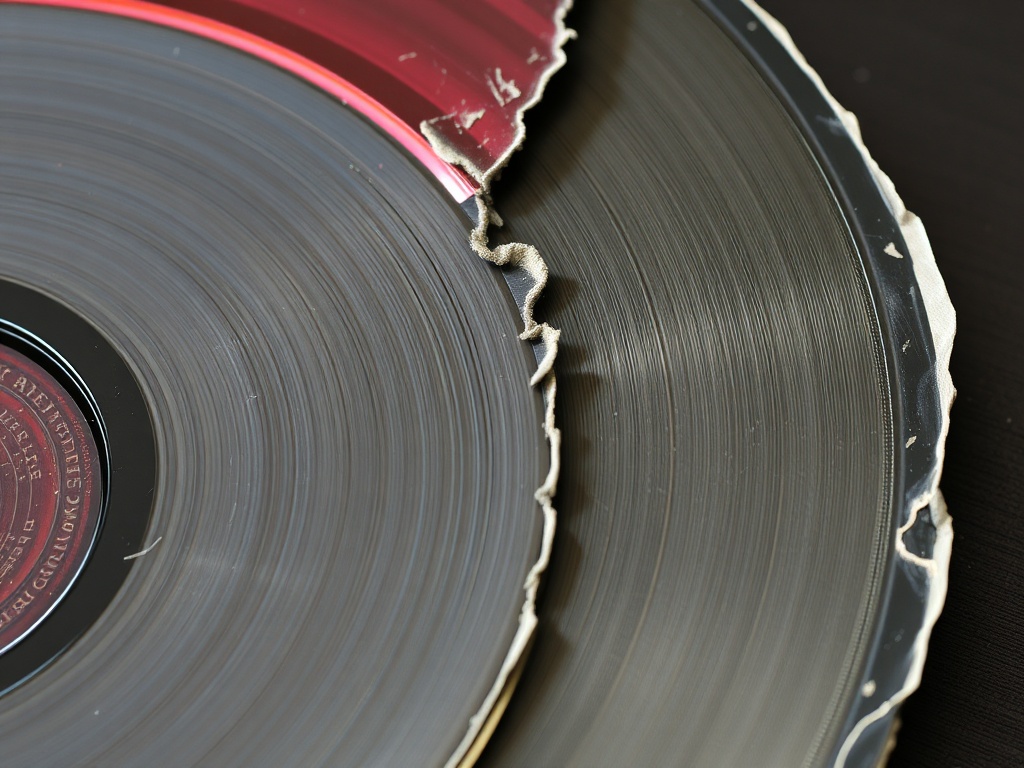
LaserDiscs are physically large, rigid, and deceptively fragile. Unlike VHS tapes or DVDs, they don’t forgive poor storage. Lay them flat in stacks and you introduce pressure. Lean them at angles and you introduce stress. Pack them too tightly and you create friction.
Over time, that adds up to subtle but permanent damage:
- Warping that affects playback
- Jacket ring wear and corner softening
- Surface scuffs from micro-movements
- Inner sleeve stress marks
You won’t notice it in a week. You will notice it in a year. And buyers definitely notice it when you try to sell.
The Habit That Fixes All of This
Vertical storage isn’t just about aesthetics—it’s about physics. When a LaserDisc stands upright with even support across its edge, weight distributes naturally. There’s no pressure stacking, no bending, no uneven stress.
But the detail most people miss: support matters more than orientation alone.
If your discs are upright but loosely leaning, you’re still introducing warp risk. If they’re crammed tightly, you’re trading warp for friction damage.
The ideal setup looks like this:
- Discs standing vertically
- Light, even contact between jackets
- Support on both ends (bookends or shelf walls)
- No leaning angles beyond a few degrees
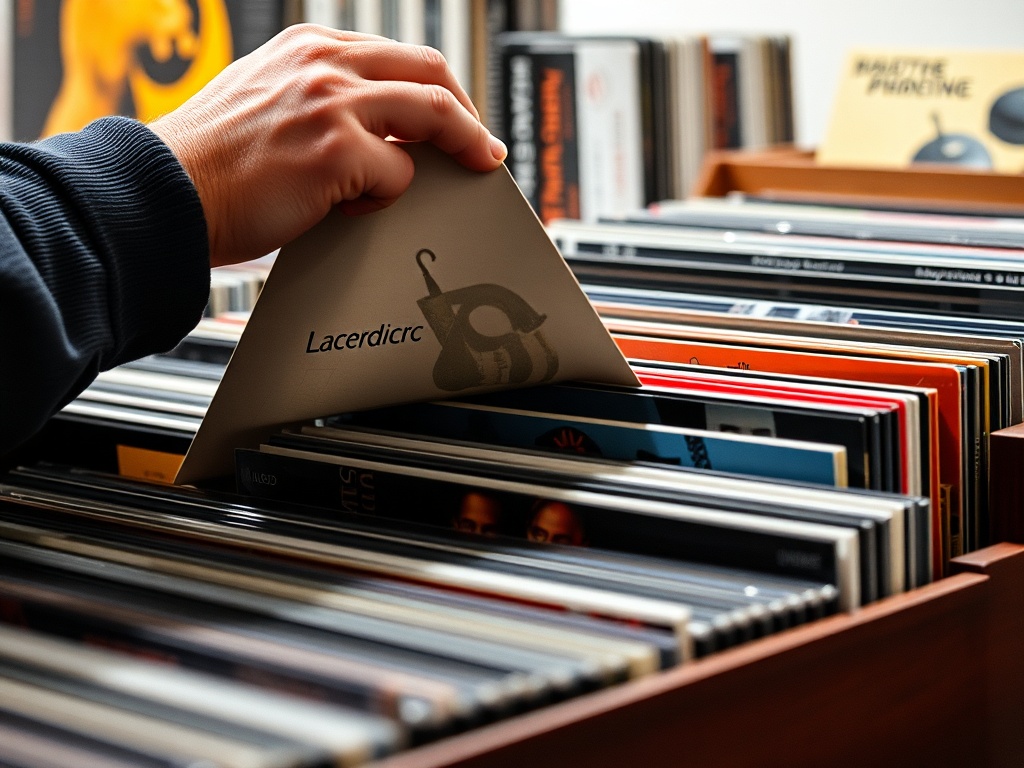
Think “record store bin,” not “overstuffed bookshelf.”

Why This One Habit Protects Value
Collectors love to talk about rarity. But condition is what actually closes deals.
A common pressing in excellent condition will outperform a rare title with visible wear every time in a serious collector market. And storage is the biggest invisible factor behind condition.
Vertical, supported storage preserves:
- Flatness — critical for playback integrity
- Jacket sharpness — corners, edges, gloss
- Surface cleanliness — fewer micro-abrasions
- Perceived care — buyers can tell instantly
When someone flips through your collection and everything feels consistent—no warped jackets, no sagging stacks—you’ve already won half the negotiation.
Display Matters Too (And This Habit Nails It)
LaserDiscs were designed to be seen. The cover art is oversized for a reason—it’s part of the experience.
Vertical storage naturally turns your collection into a gallery. Titles align. Artwork becomes readable. You can rotate front-facing displays without disturbing the structure.
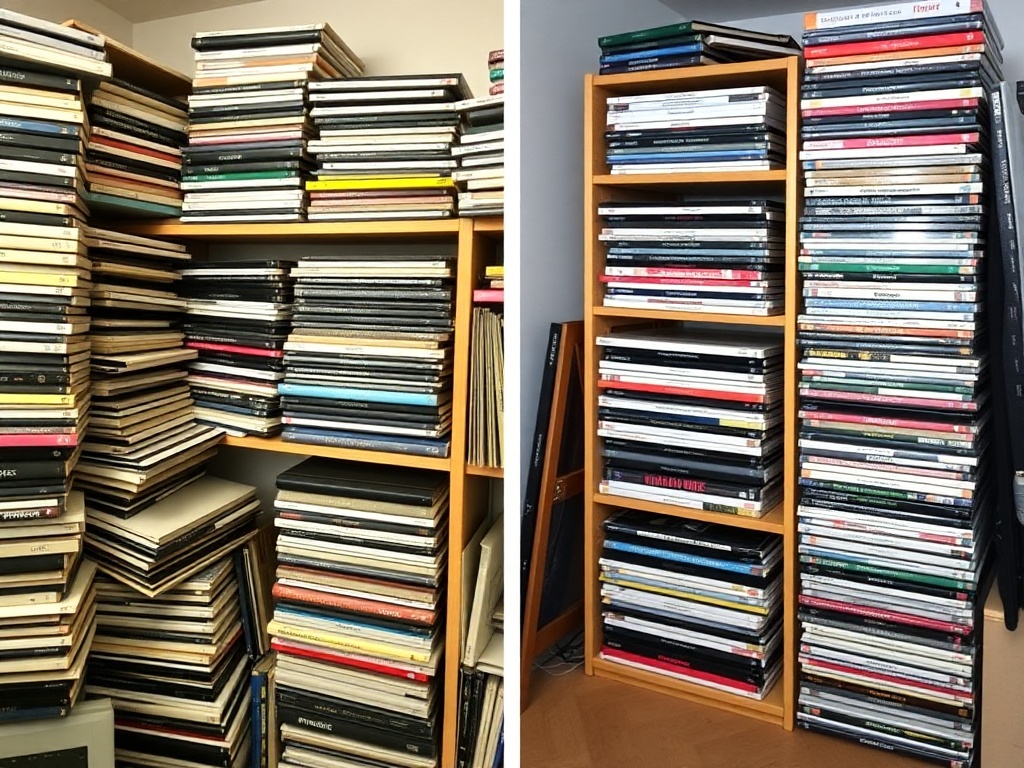
Compare that to stacked storage, where everything disappears into piles. Out of sight becomes out of mind—and eventually, out of care.
If you’ve ever walked into a collector’s room and immediately felt impressed, this is usually why: the collection breathes. It has rhythm. It looks intentional.

Common Mistakes (Even Serious Collectors Make)
Let’s call these out directly, because they show up everywhere:
- Stacking horizontally — fastest path to warping
- Overpacking shelves — causes edge wear and friction
- Leaning rows — slow, uneven disc stress
- Mixing sizes loosely — instability across the row
- No end support — gradual collapse over time
None of these feel catastrophic in the moment. That’s exactly why they’re dangerous—they’re slow damage habits.
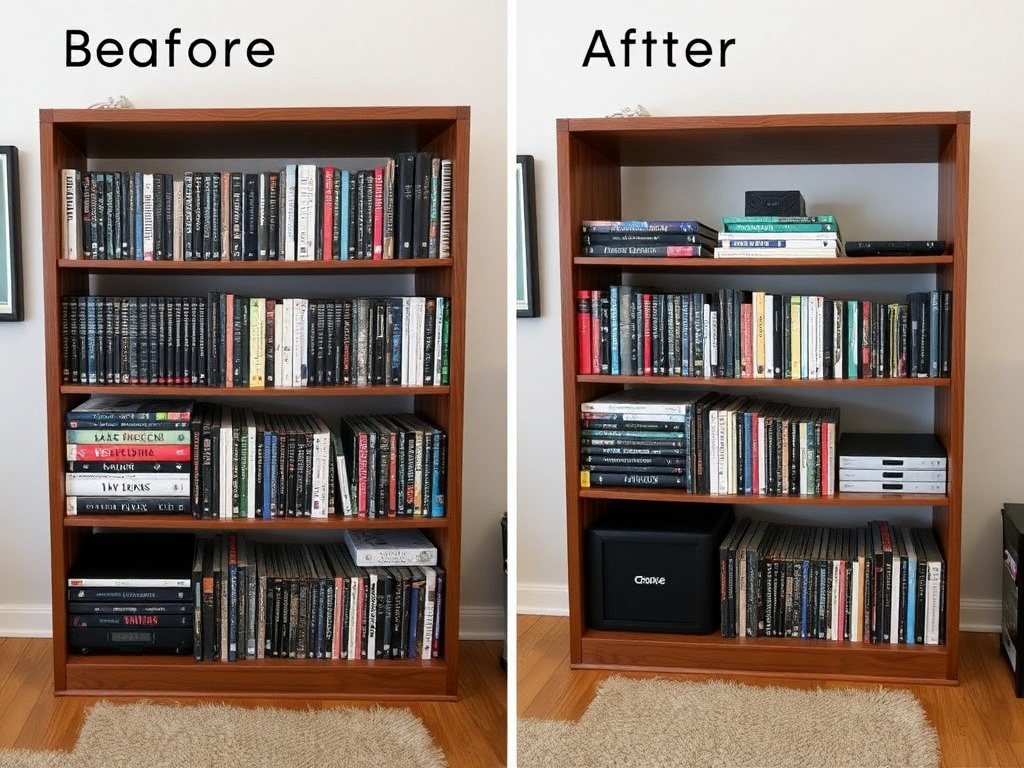
How to Fix Your Setup in 30 Minutes
You don’t need custom shelving or expensive gear. A quick reset makes a huge difference:
- Remove all stacked discs
- Stand everything vertically
- Add simple bookends or tighten shelf width
- Adjust spacing so discs lightly touch
- Pull any leaning rows back to upright alignment
That’s it. You’ve just extended the life—and visual impact—of your collection significantly.
If you want to go further, add protective outer sleeves and keep humidity stable. But those are upgrades. This habit is the foundation.
What This Says About You as a Collector
There’s a subtle shift that happens when you adopt this habit. You stop thinking like someone who owns LaserDiscs and start thinking like someone who curates them.
That shows up in everything else—how you buy, how you display, how you talk about your collection.
And it’s visible. Anyone who knows the hobby can spot it in seconds.
Neat rows. Clean jackets. No sagging shelves. It signals discipline, care, and long-term thinking.
That’s the difference between a pile of discs and a collection worth respecting.

The Bottom Line
You don’t need rarities to elevate your collection. You need consistency.
Store your LaserDiscs vertically, fully supported, and evenly spaced.
It’s the simplest upgrade you can make—and the one most collectors overlook.
Do it once, do it right, and everything else in your setup gets better from there.