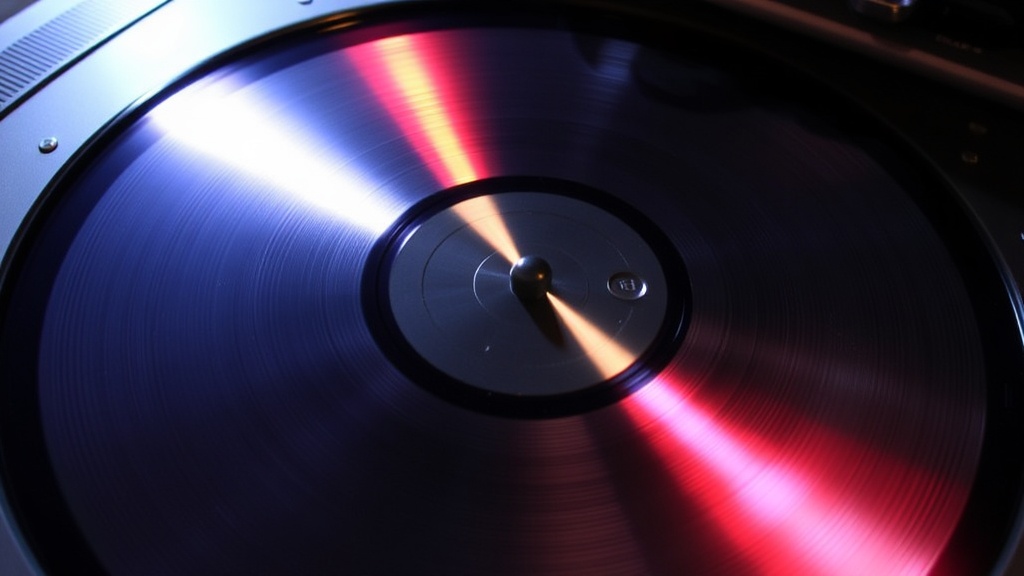
The Collector's Guide: 5 Essential Laserdiscs Worth Hunting Down Today

The Criterion Collection Blade Runner: The Director's Cut
Star Wars Trilogy: Definitive Collection Box Set
Akira: Pioneer Special Edition with Storyboards
The Beatles: Anthology Complete Laserdisc Set
Disney's Beauty and the Beast: CAV Edition
This guide spotlights five laserdisc releases that command serious attention in today's collector market. Whether you're building a curated collection or hunting for that one title that completes the shelf, these picks represent genuine value—rare pressings, superior transfers, and editions you simply won't find on any streaming service.
What Makes a Laserdisc Valuable to Collectors?
A laserdisc's worth hinges on three factors: scarcity, condition, and content exclusivity. Press runs for many titles were smaller than VHS releases, and some discs contain director's cuts, commentary tracks, or special features that never made the jump to DVD or Blu-ray.
Condition grading follows a straightforward scale. Mint means pristine—no scratches, no laser rot, original packaging intact. Near-mint allows minor sleeve wear. Anything below very good-plus starts eating into resale value fast. The catch? Laser rot—that white speckling creeping from the disc edges—can't be reversed. Always inspect for it before buying.
Packaging matters too. Gatefold sleeves, art books, and collector's editions from studios like Criterion and Pioneer fetch premiums. Original pressings of Akira or Blade Runner with their oversized art—those are the trophies.
Are Laserdiscs Worth Collecting in the Streaming Era?
Yes—for collectors who care about physical media ownership, film history, and audio-visual quality that predates aggressive digital compression.
Streaming services compress the life out of older films. Bitrates fluctuate. Colors get "corrected" by algorithms. A well-preserved laserdisc running through component cables on a CRT display delivers an analog warmth that high-bitrate digital sometimes misses. You'll notice it in grain structure, in color stability, in the lack of macroblocking during dark scenes.
There's also the ownership angle. When licenses expire and titles vanish from Netflix, your laserdisc collection stays put. The Criterion laserdisc of Salo—banned, pulled, legally fraught—remains playable decades later. No server farm can erase it from your shelf.
The Community Angle
Freya Abdi built laserdiscs.blog partly because the collector scene in Oakland (and beyond) remains surprisingly active. Swap meets at Alameda's Antiques Faire, eBay hunting, Discord servers trading rip logs—there's a whole ecosystem. That said, it's not about nostalgia for analog's sake. It's about stewardship. Someone has to preserve this stuff.
Which Releases Should Serious Collectors Prioritize?
Five titles stand out. Each offers something unavailable elsewhere—technical superiority, historical significance, or sheer scarcity.
1. Akira (1988) — Pioneer Special Edition
The gold standard. Pioneer's 1993 release of Katsuhiro Otomo's masterpiece shipped as a two-disc set with a glossy art booklet, production sketches, and the original Japanese Dolby Surround mix uncompressed. This was the definitive home video version until Blu-ray arrived—and some purists still prefer it.
Video quality on this transfer was supervised by the film's color timer. Rich blacks. No edge enhancement artifacts. The disc set regularly commands $200–$400 depending on condition. Here's the thing: early pressings have a distinct red spine. Later runs switched to blue. Red spine? Worth more.
2. Blade Runner (1982) — The Criterion Collection
Before the Final Cut, before the 4K restoration, Criterion's laserdisc was the only way to see Ridley Scott's unicorn dream intact. This 1993 release includes the workprint version, the international cut with extra violence, and the notorious US theatrical version with Ford's voiceover.
The packaging—a silver foil box with production art—remains iconic. Collectors hunt this one for the supplements: the documentary On the Edge of Blade Runner (produced by the BBC), plus commentary tracks that never resurfaced on later discs. Criterion's laserdisc line essentially invented the special edition format we take for granted today.
Pricing varies wildly. Sealed copies with the gold Criterion seal intact can hit $500. Opened but pristine? $150–$250.
3. The Star Wars Trilogy — Definitive Collection (1993)
Lucasfilm's six-disc box set represents the last official release of the theatrical versions—no Special Edition CGI, no Greedo shooting first, no Hayden Christensen ghost at the end of Jedi. For Star Wars historians, this isn't optional. It's required.
Each film spreads across two CLV discs (standard play) rather than the higher-resolution CAV format. The trade-off? No chapter search by frame, but longer playback per side. The included booklet runs nearly 100 pages with Ralph McQuarrie art, production stills, and Lucas interview transcripts.
Box condition determines value. The outer slipcase was cardboard, not plastic—easy to crush, impossible to replace. Complete sets with mint packaging start around $180 and climb past $400 for sealed specimens.
4. Baraka (1992) —MPI Special Edition
Ron Fricke's non-narrative visual poem—shot on 70mm, transferred with obsessive care. The laserdisc preserves the film's 2.20:1 aspect ratio and features a DTS audio track (rare for the format) that requires an external decoder. Without one, you get analog stereo. With one? Room-shaking.
This disc exemplifies why collectors bother with the format. The 2008 Blu-ray used a different scan. Some prefer this transfer's photochemical grain. Others hunt it for the Michael Stearns isolated score track. Either way, it's a showpiece—pop this in at a collector meetup and watch the room go quiet.
Expect to pay $80–$150. DTS decoder boxes? That's another hunt entirely.
5. The Lord of the Rings (1978) — CAV Edition
Ralph Bakshi's animated adaptation—maligned upon release, reappraised since—received a lavish CAV treatment from Warner. CAV (constant angular velocity) means each frame gets its own address. You can freeze-frame without resolution loss, step through animation cels one by one, study the rotoscoping technique.
The supplemental material runs deep: Bakshi commentary, behind-the-scenes footage, storyboards for the unproduced Part Two. For animation historians, this disc is a primary source. The film itself? A flawed masterpiece with stunning backgrounds and that unforgettable Leonard Rosenman score.
Copies circulate between $60–$120. Worth noting: the later CLV reissue lacks the frame-accurate search and most supplements. Check the disc labels before buying. CAV discs have "Standard Play" or "CAV" marked clearly.
How Do Laserdisc Prices Compare Across Markets?
Pricing isn't random. It follows patterns based on format type, rarity, and condition. Here's what collectors actually pay:
| Title | Format | Average Price (Good+) | Sealed Premium |
|---|---|---|---|
| Akira (Pioneer SE) | 2-disc CLV + Booklet | $180–$250 | +150% |
| Blade Runner (Criterion) | 2-disc CAV + Box | $150–$300 | +200% |
| Star Wars Trilogy (Definitive) | 6-disc CLV + Book | $180–$350 | +100% |
| Baraka (MPI DTS) | 2-disc CLV + Decoder Req. | $80–$150 | +75% |
| Lord of the Rings (CAV) | 2-disc CAV + Extras | $60–$120 | +60% |
CAV discs generally cost more than CLV equivalents—better picture quality, frame-accurate navigation, often superior supplements. The catch? Shorter runtime per side. A two-hour film needs four CAV sides versus two CLV sides.
Where to Hunt
eBay dominates, but prices there reflect global demand. Better deals hide at estate sales, thrift stores in affluent zip codes, and community marketplaces like r/laserdisc. The Oakland Alameda Point Antiques Faire—first Sunday of every month—sometimes yields bins of discs at $5–$10 each. Condition varies. Patience required.
Japanese imports deserve attention too. Toho's laserdisc of Godzilla vs. Biollante contains the original stereo mix, never released Stateside. Hong Kong pressings of Shaw Brothers wuxia films—often uncut, always gorgeous. Just ensure your player handles the NTSC-J region. Most do, but some early US players choke on the disc size variation.
"The hunt matters as much as the find. Every laserdisc in my collection has a story—where I found it, who I bought it from, what I traded away to get it. That's the part streaming can't replicate." — Freya Abdi, laserdiscs.blog
Start with one title that genuinely excites you. Research its pressing history. Learn the difference between CLV and CAV, between Dolby Surround and AC-3 RF. Build slowly. The format rewards the patient—not because scarcity creates false value, but because every disc was produced with care that's increasingly rare in home video.
The Akira sits on the shelf. The Blade Runner Criterion waits in a climate-controlled closet. Eventually—maybe at the next Oakland swap meet, maybe through a lucky Discogs alert—the next piece arrives. That's the rhythm. That's the collection.