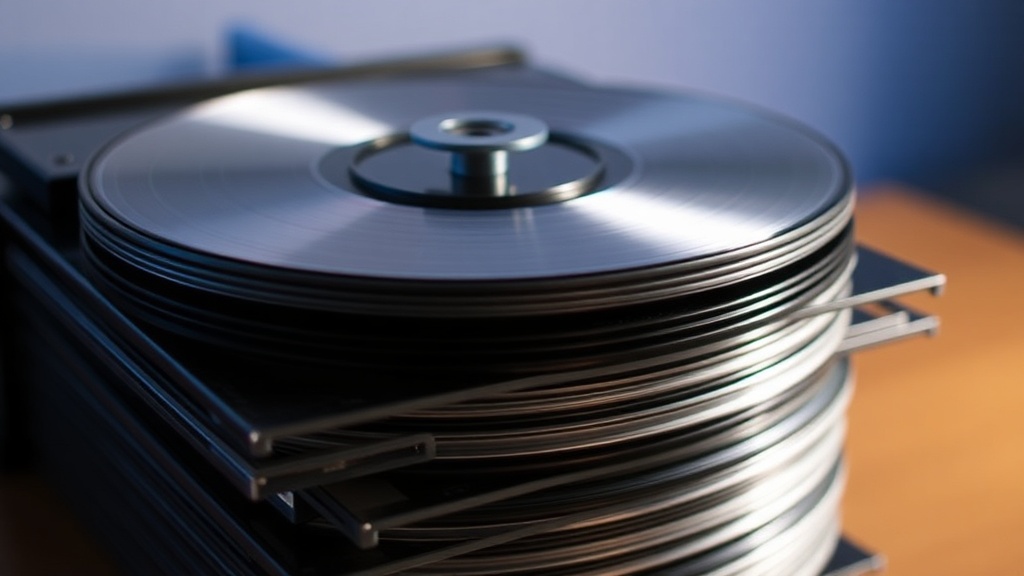
Store Your Laserdiscs Vertically to Prevent Permanent Side-Rot Damage

Quick Tip
Always store laserdiscs vertically in their sleeves to prevent gravity-induced warping and side-rot.
This post covers the simple but often overlooked storage habit that prevents laserdiscs from developing side-rot — a permanent warping of the disc edges that ruins playback. You'll learn why vertical orientation beats horizontal stacking, how shelf choice matters, and what to do if early signs of warping appear. For collectors investing in Criterion editions and Japanese imports, this one's worth getting right.
What Is Laserdisc Side-Rot?
Side-rot is a form of disc warping where the edges of a laserdisc curl or bend under prolonged pressure, usually from horizontal stacking or tight shrink-wrap. The catch? Unlike vinyl, laserdiscs are rigid optical discs with delicate reflective layers sandwiched between two sheets of acrylic (and yes, that includes the fancy box sets). Once that acrylic sandwich bends, the laser can't track properly. You'll see skipping, picture rolling, or total refusal to play. Heat and humidity make it worse — especially in attics, garages, or unheated storage units around the Bay Area.
How Should Laserdiscs Be Stored?
Always store laserdiscs vertically, like books on a shelf, with enough support that they don't lean or slump. Standing upright distributes weight evenly across the edge and eliminates the downward pressure that causes side-rot. Here's the thing — not all shelves work equally well.
The IKEA KALLAX unit is a popular choice among Oakland collectors because the 13" x 13" cubbies fit laserdisc jackets almost perfectly upright. For smaller collections, a Case Logic media tower or vintage audio rack from the 1980s (Pioneer, Technics) does the job. Tight packing is actually good — it prevents leaning — but don't force discs in so hard that jackets tear. Avoid wire racks where discs can slump; leaning creates uneven pressure that leads to edge-warp over months, not years.
| Storage Method | Risk of Side-Rot | Best For |
|---|---|---|
| Vertical on solid shelf | Low | Long-term collections |
| Horizontal stacking | High | Short-term moves only |
| Leaning in wire racks | Moderate | Display — not storage |
| Original shrink-wrap | High | Should be removed immediately |
Can Side-Rot Damage Be Reversed?
No — side-rot is permanent. A warped laserdisc cannot be flattened safely without cracking the reflective layer or separating the acrylic halves. That said, slight edge-warping that doesn't affect tracking might still be playable on a well-maintained player like a Pioneer CLD-D704 or HLD-X9. Worth noting: some collectors sell warped discs honestly as "parts only" on LDDB or eBay. Prevention beats replacement every time.
For more on archival media care, the Library of Congress preservation guidelines cover optical disc handling in detail. The Northeast Document Conservation Center also publishes temperature and humidity recommendations that apply directly to laserdisc collections stored in home environments.
Freya's take? Store them vertically. Keep them cool. Don't let nostalgia override common sense — your discs will outlast the players.