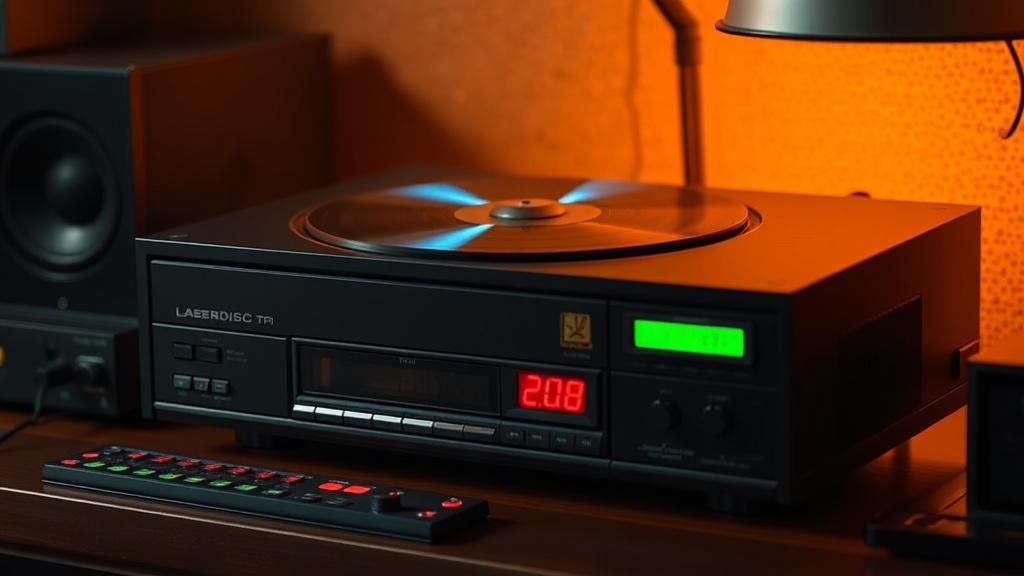
Is Your Vintage LaserDisc Player a Relic of Charm or a Roadblock to Quality?

Imagine unearthing a first-generation Pioneer VP-1000 at a dusty estate sale, its chrome gleaming under a faint bulb. For many, that sight ignites a thrill—a tangible connection to the dawn of home video, a piece of technological history. But here’s the rub: that early player, while undeniably cool, delivers a vastly different experience from a late-model Pioneer CLD-D704 or a high-end CLD-97. Understanding these differences isn't just about technical specifications; it’s about managing expectations, preserving your collection, and ultimately, enjoying your LaserDiscs the way they were meant to be seen and heard. This discussion will cut through the nostalgia to examine the practical implications of embracing early LaserDisc players versus the more refined later models for today's collector.
Why Do Early LaserDisc Players Still Hold Such Allure for Collectors?
The magnetic pull of early LaserDisc players often comes down to a potent mix of nostalgia, aesthetic, and historical significance. For those of us who remember these machines from childhood, or who are captivated by the industrial design of late 70s and early 80s electronics, an early player like the Magnavox VH-8000 or the aforementioned VP-1000 is an object of art in itself. Their weighty construction, tactile buttons, and sometimes elaborate loading mechanisms speak to an era when consumer electronics were built to last, rather than to be disposable. There's a certain satisfaction in operating a machine that feels like a piece of precision engineering, often with a satisfying clunk and whir that modern, silent disc players simply can't replicate. It's an analog experience through and through—from the physical interaction with the machine to the signal chain it produces. These early models are often simpler, focusing solely on the playback of CAV (Constant Angular Velocity) and CLV (Constant Linear Velocity) discs without the bells and whistles of later players, which can appeal to purists. They represent the foundational technology of LaserDisc, before digital audio, sophisticated comb filters, and complex digital effects became commonplace. For some, the pursuit of these vintage units is part of the collecting challenge itself—a hunt for a rare artifact that tells a story of innovation and ambition. It’s a connection to the very roots of a format we all cherish, a tangible piece of video history that sparks conversation and admiration among fellow enthusiasts.
What Performance Compromises Do You Face with First-Generation Machines?
Stepping back in time with an early LaserDisc player inevitably means accepting certain performance trade-offs, particularly when viewed through the lens of contemporary display technology. The most significant compromise for many is the absence of digital audio outputs. Early players were strictly analog, meaning your audio experience is limited to the RCA stereo outputs. While high-quality analog audio can be fantastic, it lacks the pristine clarity and dynamic range that later players offered with digital PCM audio tracks. You won't find Dolby Digital AC-3 RF outputs or DTS support here—features that became standard on many mid-to-late 90s players and are often sought after by serious collectors for a truly immersive home theater experience. Video quality also takes a hit. Early machines typically feature simpler video processing circuits. This often translates to a softer image, less accurate color reproduction, and more visible video noise compared to players equipped with advanced 3D comb filters and improved video DACs (Digital-to-Analog Converters) found in models from the late 80s and 90s. Chroma noise—color fringing and bleeding—can be more pronounced, and details might appear smeared. Tracking stability can also be a concern. Wear and tear on the optical pickup mechanism and other moving parts are more likely on older machines, potentially leading to skips, picture dropouts, or a general instability in playback. Repairing these older units can be a nightmare; parts are scarce, service manuals are often hard to come by, and fewer technicians possess the specialized knowledge required to diagnose and fix them. Furthermore, early players might struggle with certain disc types or conditions that later models handle with ease, such as slightly warped discs or those with minor imperfections. The robust error correction systems present in newer players simply weren't a design priority or technological possibility in the format's infancy. For a deeper dive into LaserDisc technology, the